Match a Rainy Brooklyn Day to the Child's Age
Choose one indoor anchor, one low-pressure backup and a short transfer—using age, tickets, food rules and sensory needs to shape the day.
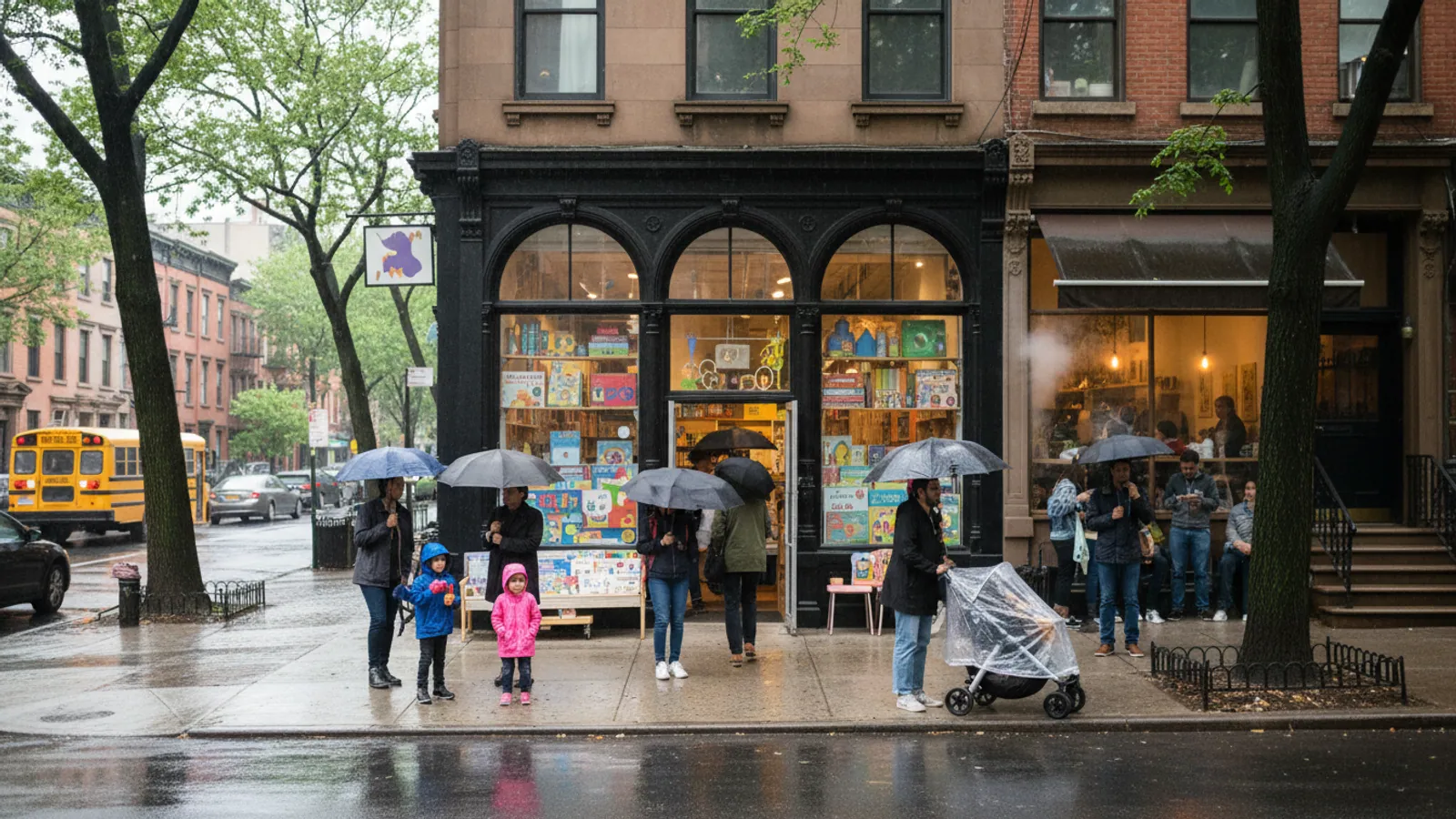
A rainy-day plan works best when it is short and age-specific: one reservable indoor anchor, one nearby library or café backup, and no more than one exposed transfer. Brooklyn Children's Museum can suit younger children, the Transit Museum can engage school-age visitors, and library programs span ages—but tickets, hours and programs must be checked directly.
Start with the age and purpose
Toddlers need room to move, a reliable bathroom and an easy exit more than a packed itinerary. Preschool and early-elementary children often do best with hands-on exhibits followed by a quiet reset. Tweens and teens should help choose the subject and may prefer a maker program, film, gaming session or independent browsing. Use each operator's stated age guidance rather than guessing from photos.
Price the whole plan
Compare the full cost before reserving: admission, timed tickets, transit, coat storage and food. A library visit may be free while a museum requires advance purchase. Do not repeat old free-hour claims; official ticket pages control. If the budget is firm, make the library the anchor and treat paid attractions as optional alternatives.
Check access and everyday logistics
Verify step-free entrances, elevator status, stroller rules, seating, restrooms and sensory resources with the venue. “Indoor” does not mean easy with a wet stroller or mobility device. Choose the entrance and subway or bus path before leaving, and keep a same-neighborhood backup so one elevator or capacity problem does not end the day.
Build a plan with a backup
For ages zero to five, plan 60 to 90 minutes plus food and rest. For school-age children, pair one substantial visit with a choice they control. For teens, give the plan a purpose—making, researching, gaming or seeing a specific exhibition. Put the wettest walking segment first only if everyone can arrive with dry layers and storage.
Write the make-or-break requirement at the top of the plan and keep optional preferences below it. That small distinction makes it easier to change course without losing the part of the day, meal or application that the household actually needs.
Verify before you go or apply
Check tickets, hours, sold-out notices, age rules and bag or stroller policies on the day of the visit. Library event listings can require registration even when admission is free. This page was substantially verified September 26, 2026 and intentionally avoids promising a particular program will recur.
Details that should be explicit whenever they are known: age fit, cost, registration or reservation requirements, restroom and stroller conditions, accessibility, food rules and the date checked. Unknown details stay unknown; contact the responsible operator rather than filling the gap with an assumption.
Avoid the shortcut
Do not cross Brooklyn for a vague second stop, confuse Central Library with the Brooklyn Heights branch or assume a venue permits outside food. Skip the heroic all-day itinerary: rain increases travel friction, and a calm early exit is often the better family decision.
This page is part of The BK Brief's Family Life desk. It provides a source-led research and planning method, not childcare placement, education, medical, dietary or legal advice. Use the linked agencies and operators for current requirements and individual support.
Last verified September 26, 2026. Practical details can change; check linked official sources before making plans.